Biography
Raphaël Lambelet is a wildly romantic, meticulously creative man who started out as a pastry chef and confectioner. He left the business shortly afterwards to devote himself to painting. As a young man, he worked as a waiter on the side to pay the bills. Fascinated by the restaurant business, he eventually became fully involved and opened his first bistro in 2002.
Perched atop the mythical Case à Chocs building (NE), l'Interlope becomes a place to develop his cuisine, directly inspired by the visual arts. Here, Raphaël ventures into unexpected combinations of taste, texture and color. A few years later, he took over the Bain-des-Dames (NE), which quickly became a fixture on the Neuchâtel gastronomic scene. It was at this point that his palate really took to wine.
In 2010, he experienced his first natural love at first sight, and will never look back: "The starting point for all this was Mylène Bru's La Bordigue. A red wine. I remember it like it was yesterday! The elegance and drinkability of Mylène Bru's wines imposed a new curiosity on the restaurateur, who began to search, taste, spit, discover, swallow and deploy this budding love for juices without inputs or sulfites.
By 2020, he and his friend Franz Hausammann were one of the two wine merchants behind Le Naturiste. The duo set out to explore even more of Switzerland, France and Alsace to meet the faces of contemporary natural winemaking. From winery to winery, Raph tastes countless keels. The desire to produce his own juices titillates him...but something is still holding him back. When will it all click? Fortunately (for us as for him), the epiphany doesn't take too long...
In 2022/23, he worked with Jean-Michel Henrioud (Auvernier, NE), tending Chasselas and Pinot Noir vines typical of the region. It was then clear: this time, it was the restaurant business that he had to leave behind, to make room for an intimate and concrete contact with the land. Thus, guided by Henrioud - a pioneer of natural wine in the region, he is also the druid of the Littoral, preparing herbal teas for several estates - Elodie Kuntzer and Benoit de Montmollin, he finally launched himself as a winemaker.
"After all these years of catering, I needed more than a garden at home. Something serene, authentic and calm... Winegrowing was the only option that really resonated with me."
And because you can't force destiny, but it comes naturally when you're in the right place, an acquaintance opened the cellar of an old building in Colombier (NE) for him. An unimaginable stroke of luck. Work began in winter 2023/24, in parallel with the vinification of the 2023 vintage.
Summoning the knowledge shared by the winemakers we met in the years leading up to this move, gleaning vineyards in the canton, the adventure began with the firm intention of working the land, living in it fully and understanding each vintage...
The cellar
A romantic event, the midnight swim invites you to let go. It calls for a moment of madness and nudity. Yet it's also a very common summer ritual, underlining Raphaël Lambelet's desire to offer emotional wines to all, and his desire to bring people together around carefully chosen flavors and colors.
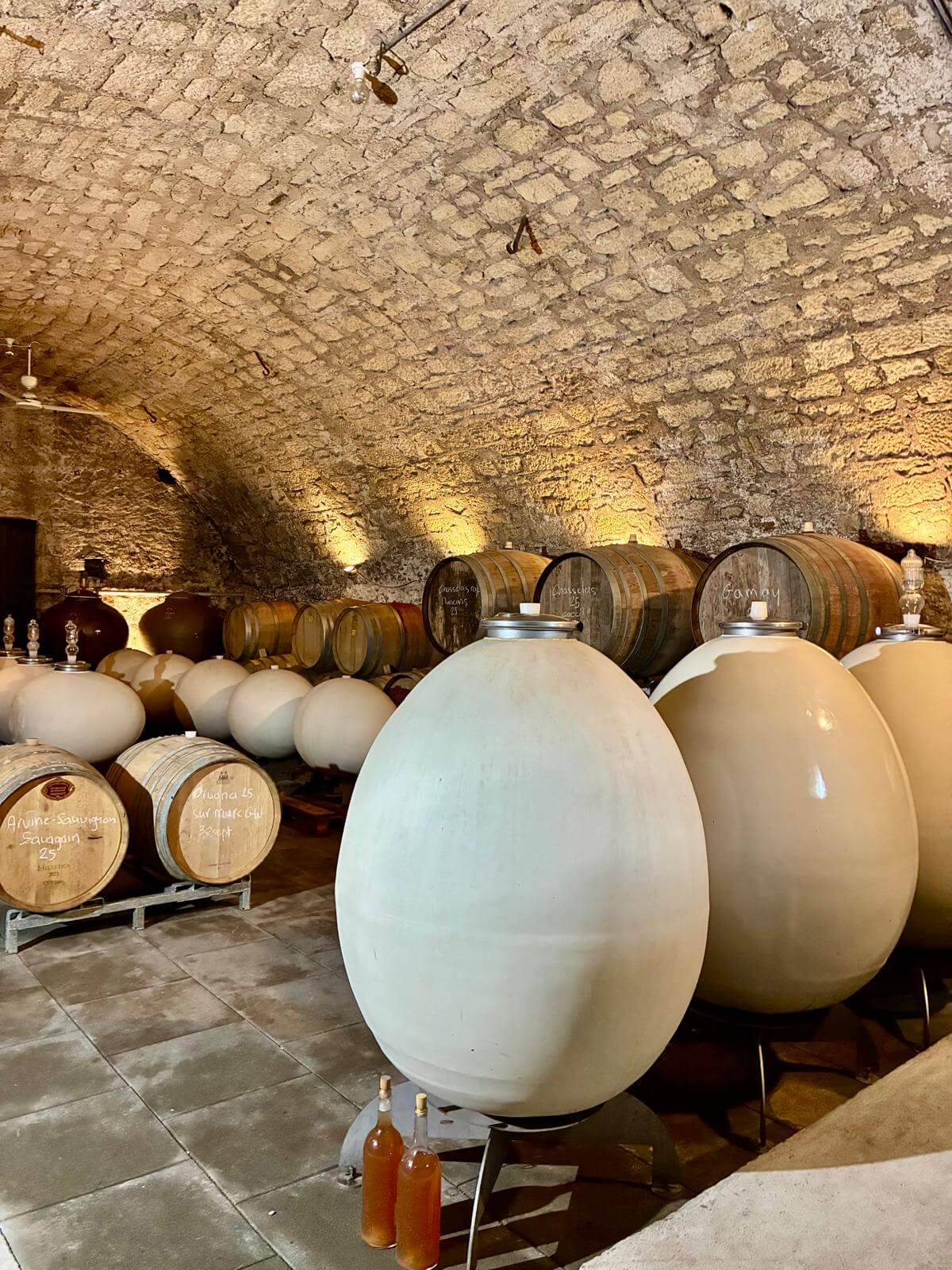
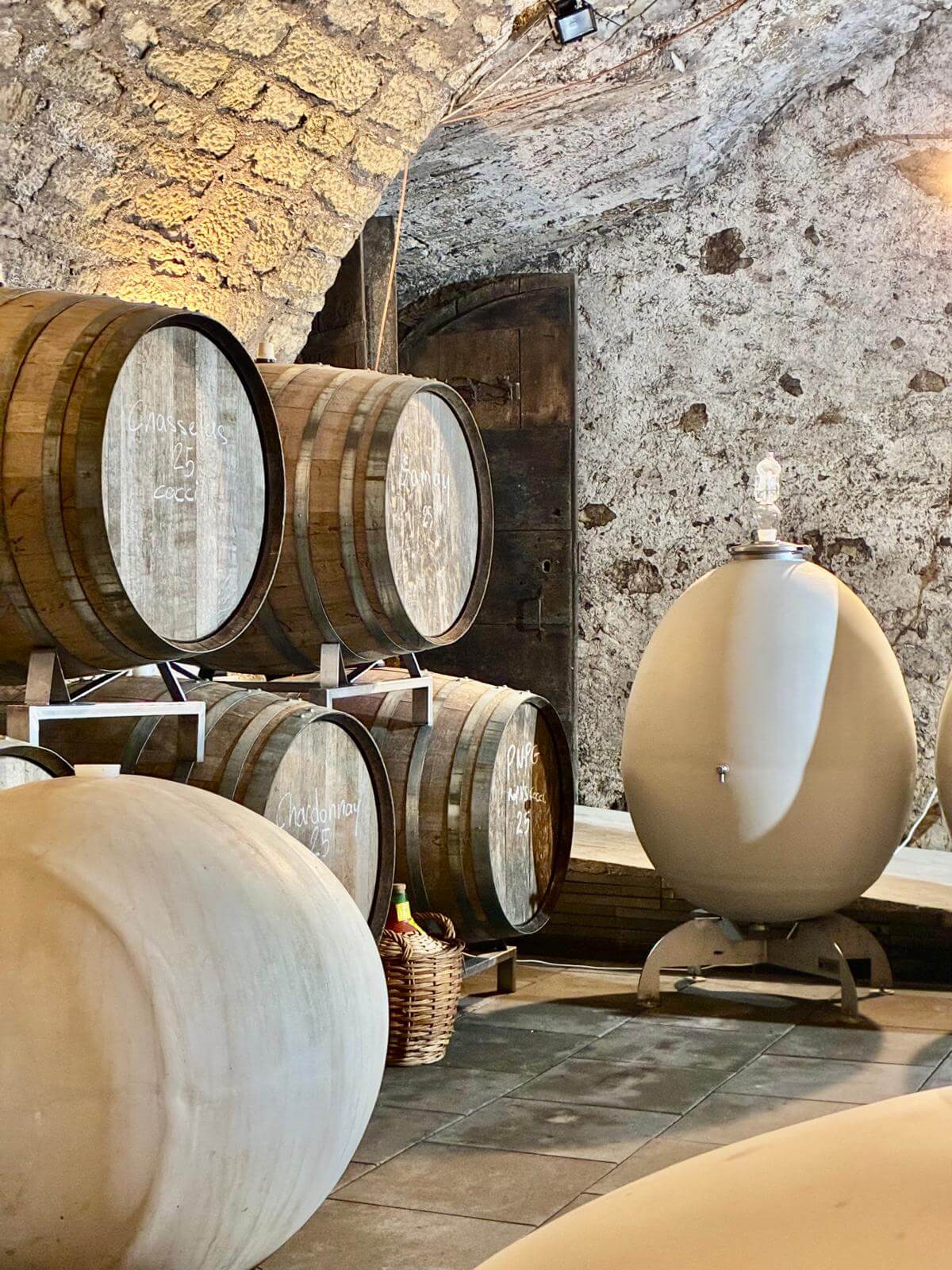
Bain de Minuit was born of a sensual approach to viticulture. Treating the vines with respect - that is, without pesticides, inputs or sulfites - is a matter of course; Bain de Minuit wines are therefore natural "by default". Here, it's all about taking the bunches in hand, observing the discreet uniqueness of the vines, embracing the amphorae, inhaling the scent of southern earth and letting the rough grain of the white ceramics run through your fingers.
Wines: ageing
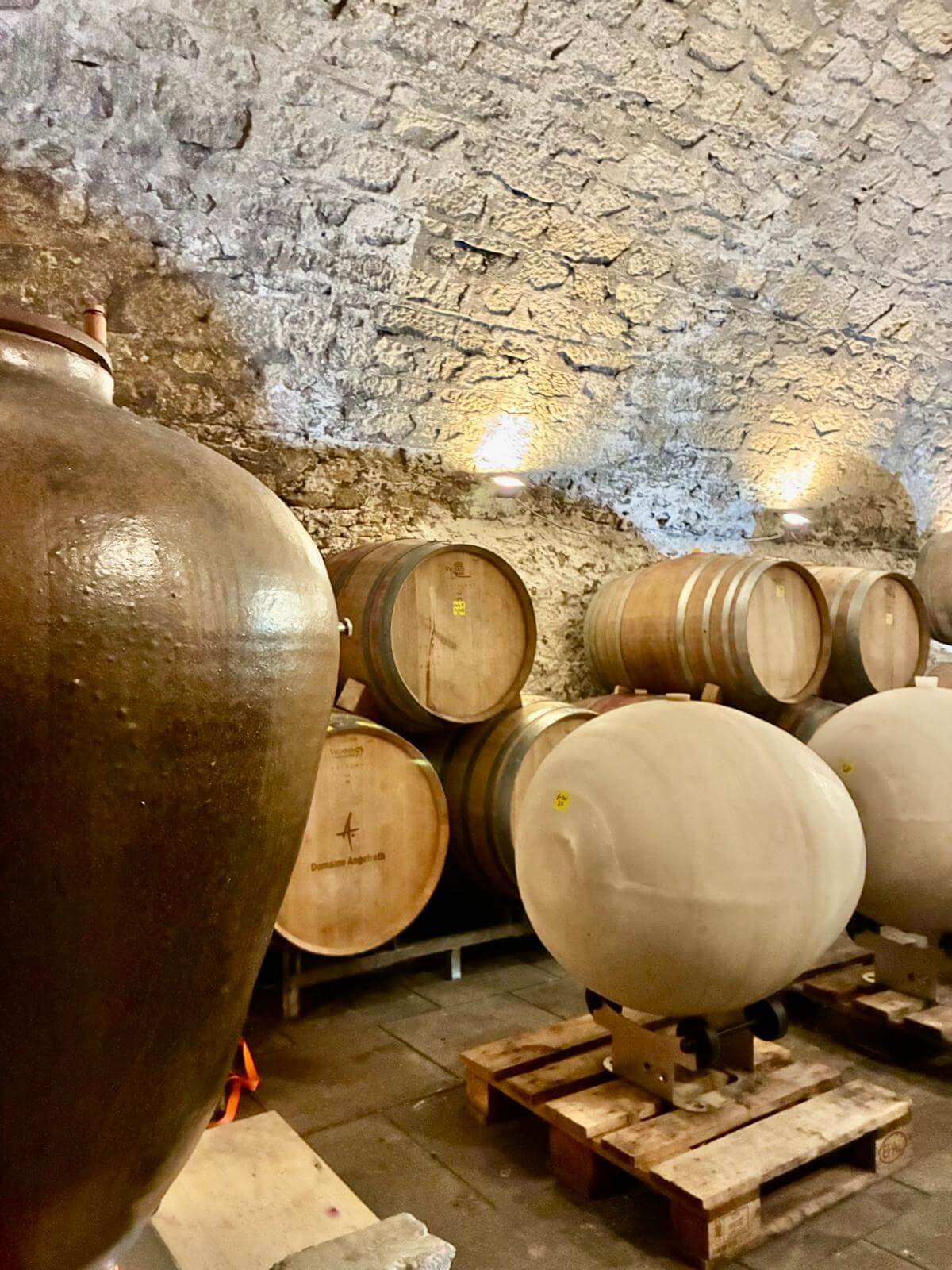
Since madness only works its magic with a certain degree of mastery, to produce precise juices, you need to have carefully selected the grape varieties, tried many blends, chosen and understood the winemaking methods. Wines matured in wine jars offer a finesse appreciated by the winemaker. In the Bain de Minuit cellar, for example, they come in a variety of types: laid eggs, dolium and Castelnaudary earthenware. These vessels allow the grape variety and terroir to reveal their full potential. To add a little complexity, most of our wines finish their maturation in barrel.
The petnats are aged on laths, then the bottles are placed on spikes to allow the lees to settle. At this point, the lees are disgorged to obtain a clear juice. The whites are left to macerate for twelve to fourteen days, with some punching down. The reds macerate between a week and a month. Then, whether white or red, all transfers are made by gravitation.
We don't filter, we don't add inputs or sulfites, although the ban on the latter is not formal: so far, they haven't been necessary at all. If the winemaker can do without them, so much the better.
Bain de Minuit's juices are clean and blend creativity and discipline, although our living craftsman is no fool: "understanding and having the technique to do exactly what you want is the story of a lifetime."